


Some HEP-TH News
2 days ago
 Via P. Dirac, which at some point turns into Via R. Feynman, a nice continuity. There are also roads for Pauli, Heisenberg, Schrodinger, Planck and others, but no Via Einstein! Of course the institute itself lies on the main road named after Enrico Fermi, so he doesn't appear on the campus map either, but that's okay.
  . This is the Sl(2,R) group manifold. The BTZ black hole can be analysed by looking at the conjugacy classes of Sl(2,R). There are three conjugacy classes: hyperbolic, elliptic and parabolic, with the BTZ black hole sitting in the hyperbolic conjugacy class. Kraus, Samuli Hemming and Esko Keski-Vakkuri have written about this in Strings in the Extended BTZ Spacetime, see section 2. An identification is made with the conjugating elements and the left and right moving temperature, and we move into a thermodynamic setting. Mass, angular momentum, entropy formulae follow, and the equivalence of a thermal AdS_3 background with a BTZ upto various modular transformations in each case.
He demonstrated how the BTZ black hole appears in each case and compared the entropy calculations in each case. The D1-D5-P entropy (Strominger and Vafa) is in exact agreement with the macroscopic Bekenstein-Hawking entropy, while the M5 branes' microscopic entropy (Maldacena, Strominger and Witten) gives a central charge consisting of two parts, the highest order part agreeing with the macroscopic count and the remainder being due to the presence of higher derivative terms in M-theory. I refer you to the two papers with Larsen linked to earlier to see the full application of the method with these examples in mind.D1-D5-P on T^4 x S^1 or K3 x S^1 M5 branes wrapped on 4-cycles in M-theory on CY_3 x S^1
 Yesterday afternoon was quite a chilly day in London, the kind of day when being crammed into a packed and warm lecture room below ground level in the basement of Queen Mary college from where you can hear the tube rattle by was quite an attractive prospect. So at three in the afternoon yesterday that's where I and other London theoretical physicists gathered to hear Terry Gannon talk about "The classification of RCFTs".
 But he only had enough time to talk a little about the first and describe to us the modular functions that appear.modular invariants (i.e. partition function on the torus) NIM representations (i.e. partition function on the cylinder)
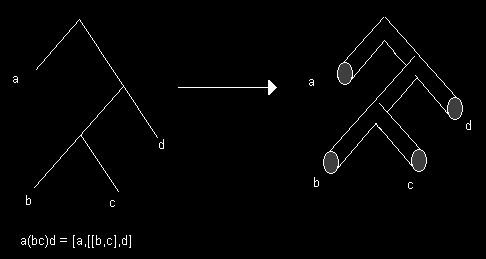 For more about this way of complexifying to get loop algebras we were referred to the work of Yi-Zhi Huang, in particular his book Two-Dimensional Conformal Geometry and Vertex Operator Algebras.
 ,
,  ) such that + = k. The Hilbert space may be written as:
 Where M is the multiplicity, and the one-loop partition function for this RCFT may be written in terms of the characters,
  :
: It turns out that the characters are modular functions, and are subject to the familiar S and T transformations:
 Furthermore, the partition function is modular invariant and characterised by its multiplicities, M.
Given some affine algebra at level k, a modular invariant is a matrix M of multiplicities describing the partition function, Z, such that,Terry told us that these conditions gave rise to RCFTs that are "just barely" classifiable.
'Sometimes you see beautiful people with no brains. Sometimes you have ugly people who are intelligent, like scientists,' he said.*By the way this is a great science news blog that I only just cottoned onto, which I heartily recommended to you all, if you haven't been there already.
'Our pitch is a bit like that. From the top it's a disgrace but the ball rolls at normal speed.'
Po´rismPoncelet's porism refers to the first case. So what is Poncelet's porism?
n. 1. (Geom.) A proposition affirming the possibility of finding such conditions as will render a certain determinate problem indeterminate or capable of innumerable solutions.
2. (Gr. Geom.) A corollary.
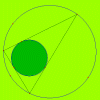 Take two conic sections, now if you can draw one n-sided polygon (n>2) such that its sides all touch tangentially one conic section and its vertices all lie on the other one, then you can draw infinitely many. The infinite comes about because you are able to rotate the polygon (not held fixed though) so that its vertices all rotate around the outer curve. Phew. Let's look at some pictures and see if this is understandable:
There are plenty more of these animations to be found here.a triangle (sort of) with vertices on a parabola and circumscribing a circle a quadrilateral with vertices on a circle and sides tangent to a parabola the classic triangle and two circles
"For an even-sided polygon, the diagonals are concurrent at the limiting point of the two circles, whereas for an odd-sided polygon, the lines connecting the vertices to the opposite points of tangency are concurrent at the limiting point."If you click on the aforementioned link showing the diagonals and move the pink line about I think you can see even there that it is not clear that the meeting point of the diagonals stays fixed. John demonstrated to us his expertise with both matlab and an excellent program called the Geometer's Sketchpad. Using matlab John took us through several pages of enormous calculations working out the locus of the meeting points of the diagonals and finally reduced the locus down to a sixth-order polynomial! Using the sketchpad John was able to convince us that the meeting point actually travels around a circle looped on top of itself three times.
"The distribution of dark matter bears no relationship to anything you will have read in the literature up to now," explained Professor Gilmore.The BBC article notes that the research findings have yet to be submitted to a journal so hold your horses...a little.
"It comes in a 'magic volume' which happens to correspond to an amount which is 30 million times the mass of the Sun.
"It looks like you cannot ever pack it smaller than about 300 parsecs - 1,000 light-years; this stuff will not let you. That tells you a speed actually - about 9km/s - at which the dark matter particles are moving because they are moving too fast to be compressed into a smaller scale.
"These are the first properties other than existence that we've been able determine."
 so you can read it here. Second, physicsweb have a blogging editorial and a blogging article from Physics World available online.

 Posts
All Comments
Posts
All Comments
 times since 2nd May, 2005.


