Saturday, August 05, 2006

Physics: More damaging than drugs?

I just had this advice entitled unequivocally "Don't Become a Scientist!" taken from Jonathan I. Katz's website forwarded to me by a friend (who quit physics to work in the financial sector) - I wouldn't have thought it to be of general interest, but apparently it is interesting enough to become a forwarded email in certain circles. It is, of course, of interest here, where all advice to young researchers from one's elders is welcome, no matter how terrifying :( - it has been discussed elsewhere over a year-and-a-half ago by Stephen Hsu (part 1 and part 2) at his blog, Information Processing, and also at Sean Carroll's former blog incarnation, Preposterous Universe, (see 5th January, 2005) and there were some comments on it by the Quantum Pontiff as well, but perhaps, like me, you missed this before:

"Are you thinking of becoming a scientist? Do you want to uncover the mysteries of nature, perform experiments or carry out calculations to learn how the world works? Forget it!

Science is fun and exciting. The thrill of discovery is unique. If you are smart, ambitious and hard working you should major in science as an undergraduate. But that is as far as you should take it. After graduation, you will have to deal with the real world. That means that you should not even consider going to graduate school in science. Do something else instead: medical school, law school, computers or engineering, or something else which appeals to you.

Why am I (a tenured professor of physics) trying to discourage you from following a career path which was successful for me? Because times have changed (I received my Ph.D. in 1973, and tenure in 1976). American science no longer offers a reasonable career path. If you go to graduate school in science it is in the expectation of spending your working life doing scientific research, using your ingenuity and curiosity to solve important and interesting problems. You will almost certainly be disappointed, probably when it is too late to choose another career.

American universities train roughly twice as many Ph.D.s as there are jobs for them. When something, or someone, is a glut on the market, the price drops. In the case of Ph.D. scientists, the reduction in price takes the form of many years spent in ``holding pattern'' postdoctoral jobs. Permanent jobs don't pay much less than they used to, but instead of obtaining a real job two years after the Ph.D. (as was typical 25 years ago) most young scientists spend five, ten, or more years as postdocs. They have no prospect of permanent employment and often must obtain a new postdoctoral position and move every two years. For many more details consult the Young Scientists' Network or read the account in the May, 2001 issue of the Washington Monthly.

As examples, consider two of the leading candidates for a recent Assistant Professorship in my department. One was 37, ten years out of graduate school (he didn't get the job). The leading candidate, whom everyone thinks is brilliant, was 35, seven years out of graduate school. Only then was he offered his first permanent job (that's not tenure, just the possibility of it six years later, and a step off the treadmill of looking for a new job every two years). The latest example is a 39 year old candidate for another Assistant Professorship; he has published 35 papers. In contrast, a doctor typically enters private practice at 29, a lawyer at 25 and makes partner at 31, and a computer scientist with a Ph.D. has a very good job at 27 (computer science and engineering are the few fields in which industrial demand makes it sensible to get a Ph.D.). Anyone with the intelligence, ambition and willingness to work hard to succeed in science can also succeed in any of these other professions.

Typical postdoctoral salaries begin at $27,000 annually in the biological sciences and about $35,000 in the physical sciences (graduate student stipends are less than half these figures). Can you support a family on that income? It suffices for a young couple in a small apartment, though I know of one physicist whose wife left him because she was tired of repeatedly moving with little prospect of settling down. When you are in your thirties you will need more: a house in a good school district and all the other necessities of ordinary middle class life. Science is a profession, not a religious vocation, and does not justify an oath of poverty or celibacy.

Of course, you don't go into science to get rich. So you choose not to go to medical or law school, even though a doctor or lawyer typically earns two to three times as much as a scientist (one lucky enough to have a good senior-level job). I made that choice too. I became a scientist in order to have the freedom to work on problems which interest me. But you probably won't get that freedom. As a postdoc you will work on someone else's ideas, and may be treated as a technician rather than as an independent collaborator. Eventually, you will probably be squeezed out of science entirely. You can get a fine job as a computer programmer, but why not do this at 22, rather than putting up with a decade of misery in the scientific job market first? The longer you spend in science the harder you will find it to leave, and the less attractive you will be to prospective employers in other fields.

Perhaps you are so talented that you can beat the postdoc trap; some university (there are hardly any industrial jobs in the physical sciences) will be so impressed with you that you will be hired into a tenure track position two years out of graduate school. Maybe. But the general cheapening of scientific labor means that even the most talented stay on the postdoctoral treadmill for a very long time; consider the job candidates described above. And many who appear to be very talented, with grades and recommendations to match, later find that the competition of research is more difficult, or at least different, and that they must struggle with the rest.

Suppose you do eventually obtain a permanent job, perhaps a tenured professorship. The struggle for a job is now replaced by a struggle for grant support, and again there is a glut of scientists. Now you spend your time writing proposals rather than doing research. Worse, because your proposals are judged by your competitors you cannot follow your curiosity, but must spend your effort and talents on anticipating and deflecting criticism rather than on solving the important scientific problems. They're not the same thing: you cannot put your past successes in a proposal, because they are finished work, and your new ideas, however original and clever, are still unproven. It is proverbial that original ideas are the kiss of death for a proposal; because they have not yet been proved to work (after all, that is what you are proposing to do) they can be, and will be, rated poorly. Having achieved the promised land, you find that it is not what you wanted after all.

What can be done? The first thing for any young person (which means anyone who does not have a permanent job in science) to do is to pursue another career. This will spare you the misery of disappointed expectations. Young Americans have generally woken up to the bad prospects and absence of a reasonable middle class career path in science and are deserting it. If you haven't yet, then join them. Leave graduate school to people from India and China, for whom the prospects at home are even worse. I have known more people whose lives have been ruined by getting a Ph.D. in physics than by drugs.

If you are in a position of leadership in science then you should try to persuade the funding agencies to train fewer Ph.D.s. The glut of scientists is entirely the consequence of funding policies (almost all graduate education is paid for by federal grants). The funding agencies are bemoaning the scarcity of young people interested in science when they themselves caused this scarcity by destroying science as a career. They could reverse this situation by matching the number trained to the demand, but they refuse to do so, or even to discuss the problem seriously (for many years the NSF propagated a dishonest prediction of a coming shortage of scientists, and most funding agencies still act as if this were true). The result is that the best young people, who should go into science, sensibly refuse to do so, and the graduate schools are filled with weak American students and with foreigners lured by the American student visa."

Thursday, June 15, 2006

The Klein Four (A group)

Perhaps The Klein Four have passed you by as well as me. Well fret not. They are an a capella group from the maths department of Northwestern Univeristy and they shot to fame last year with their love song Finite Simple Group of Order Two, which can be watched online:


They have an album out, full of more maths puns than you can shake a stick log at, which you can purchase via their website (where you can see some of their other performances) or even via iTunes.

The Klein four group, or Vierergruppe, is a direct product of two copies of Z_2, and allows us to solve the quartic.

When Art is Not Art

Via the BBC, Empty plinth sidelines sculpture a very funny, non-physics story about a sculptor who packaged his work together with a plinth for it to stand upon in a gallery. The Royal Academy of Arts decided that they had received two separate entries into the competition to be exhibited and a panel of judges decided that the plinth was the better work of art and put it on display. Hilarious.

Wednesday, June 07, 2006

Cargese: The Lectures

Well despite the beach life Cargese was a school and there were plenty of interesting lectures. The format for an average day was
0800-0900hrs Breakfast
0900-1030hrs Lecture 1
1030-1100hrs Coffee break
1100-1230hrs Lecture 2
1245-1630hrs Lunch and beach break
1630-1730hrs Lecture 3
1800-1900hrs Lecture 4
Which was very good and not too tiring. Most lecturers were given one morning and one afternoon slot, and frequently this wasn't enough time to bridge the gap between being completely pedagogical and also interesting to the experts in the audience. Let me give a list for posterity of all the talks we heard. Suggeseted preparatory literature for the talks can be found here.

BPS Black Holes by Bernard de Wit
Black Holes, Attractors and Topological Strings by Andrew Strominger
The Standard Model in String Theory from D-branes by A. Uranga
Time dependence and space-like singularities in String theory by M. Berkooz
Strings, Cosmology and Supersymmetry Breaking by S. Kachru
Multitrace deformations of vector and adjoint theories and their holographic duals by Rabinovici

Sunday, May 28, 2006

Living in the Theorists' Paradise

I find myself surrounded by the very pleasant scenery of Corsica, where I am attending the Cargese Summer School. I am sitting in a computer room, opposite the lecture theatre and there is a gentle mineral fragrance in the air carried by the rain. Fortunately this is the last day of the school and the first day an afternoon trip to the beach has been rained off. That's right: trips to the beach, and theoretical physics. Sometimes it is good to stop and appreciate your fortune.

The Cargese school commenced two weeks ago and covered a number of topics under the heading 'Strings and Branes: The present paradigm for gauge interactions and cosmology'. The school is located 20 minutes from the village of Cargese and is situated on the beach: at least it's a 2 minute walk to the beach from the institute, and views from the rooms on-site overlook a wonderful seascape, cliffs, beach and all. But, I gush... suffice it to say, it really is very nice here, and it is a pleasure to be here.

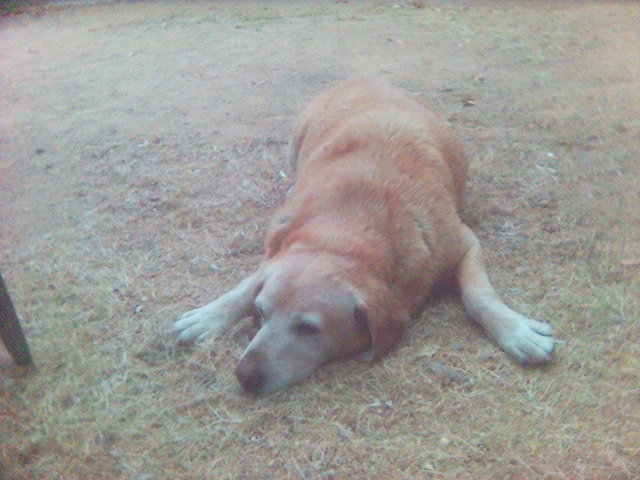
Not only is it nice it is steeped in physics history. For example, there is a peninsula called the t'Hooft peninsula where t'Hooft is supposed to have sat down and worked through the ideas that led to his Nobel prize on gauge theories and renormalization. I sat on the same peninsula, but I had forgotten my sunblock and had to retreat prior to having any great thoughts. In the garden of the institute is a tree, which is referred to as the wisdom tree, where students gather for discussion (in theory) and where it is said the lecturers have, in the past, climbed up into the branches of the tree to regail the students. Who can say how much truth there is in this. There was, in fact, some confusion as to which tree was indeed the one, true Wisdom Tree. All very worthy of Enid Blyton rather than the high energy physics community. From the garden it is possible to look out past the trees and locate a small island about a mile or so out in the sea. This is referred to as Polyakov Island after Polyakov swam out to it during one school. So, there is a sense of taking part in the continuation of physics lore while you are here. Perhaps the most astonishing feature of the school is it's two dogs: Calabi-Yau and Instanton. Calabi-Yau is seemingly quite an old dog, and saunters in and out of lectures at will (his world-weary presence, often asleep at the front is deemed a measure of respect for the lecturer, after all Calabi-Yau has probably listened to many more lectures in Cargese than anyone present - he probably already knows the full quantum theory of gravity and may be the most well-educated dog in the world). Furthermore on the nights spent in town he would invariably make the twenty minute journey and come and find us, even is we were stationed at house in town for a party, (where he would wait of his own volition patiently outside for our departure) and then he would join us for the journey home along the dark road. Although it is in truth hard to say who was leading whom. Not only is he probably the smartest dog in the world (if Carlsberg made dogs...) but he's also a wild party animal too. See picture above of Calabi-Yau working at full capacity.

I want to give you a feeling for some of the practical details of getting to Cargese just in case you are thinking of attending in the future. First off: the high energy physics school occurs every two years - if it's a World Cup or European Cup year then the school is on too and you have to apply early in the year. Registration this year closed in February. Cargese is on the south-west coast of Corsica, about an hours ride from Ajaccio airport, and you will almost certainly have to change flights somewhere in France to find a plane that will land in Ajaccio. The island has been invaded a number of times and this is reflected by the fact that you can get by speaking Italian here instead of French if you wish. Of course the modern invader is the tourist and so you can also survive using English, with a smattering of French. In fact, the locals do not like the people who buy a home here just for the holiday season and such houses have been known to burn down. Since you are likely to be taking a connecting flight you might want to be wary of one flight being delayed. This had significant financial implications for me since there were only two buses available from Ajaccio to Cargese upon arrival, and when my flight was delayed (resulting in 5 hours sitting in a Parisian cafe at the terminal in Orly, Paris - not quite 'living the dream') we had to hire a taxi at a cost of 130euros - this was subsidised by the School, and reduced to 100euros. You might think that arriving after midnight with no-one to meet you might be a problem but life at the Institute is very relaxed - so there was a poster on the wall and written in green ink was my name alongside the others who were late arrivals. Next to my name was a room number where I would be sleeping. The room was left open and keys were inside. The Institute is significantly remote for this calm attutude to security to be viable. But it is the little things like this that help to make Cargese a very peaceful place to be. The only other practical advice I can give you is that, just as in The Hitchhiker's Guide to the Galaxy, you should bring a towel.

The peaceful setting of the school and the emphasis of a healthy mixture of relaxation and work are wonderful. The mixture of mostly PhD students and young Postdocs was great for initiating collaborations and building relationships for future work and the school itself is the best I have been to during my PhD. Not only in terms of meeting fellow students but also in terms of the lecture quality. We heard lectures from De Wit, Strominger, Harvey, Douglas and Connes amongst others, and we even got to feel "the power of Nekrasov", on topics ranging from black hole entropy to noncommutative geometry with a healthy dose of lectures about realising the standard model in the string theory picture.

In the days of the cold war the school was funded by Nato and operated as a forum for bringing non-soviet scientists together. These days the event is quite global, but without a cold war the funding harder to come by. The school this year was supported by the European Science Foundation and CERN and a hearty thank-you is offered to the organisers of the school for the marvellous job they did to make this happen. So thank-you's to: Laurent Baulieu, Eliezer Rabinovici, Jan de Boer, Michael Douglas, Pierre Vanhove and Paul Windey. Without their organisation of funding, speakers, participants, schedule, support and ringing of the cowbell (although none had quite the enthusiastic glint in their eye as Pierre Vanhove when he got his hands on the bell) to get us into the lectures, Cargese quite simply would not have occurred, and it is hard to imagine it being organised any more successfully than this group managed. A special thank-you must also be reserved for Elena who took charge of all the school's administration and ensured everything ticked over nicely during the two weeks.

Some pictures and commentary on the lectures to follow.

I hate to trip but I gotta 'lope.

Monday, May 22, 2006

Back in Black

Well it's been a while... I've often heard people wonder how researchers find the time to write a blog and do their work. Well while some bloggers are superhuman, this one is not. I've had a busy and not to mention stressful start to the year and really the blog only gets my attention when everything else is in good working order. What have I been up to? Well first of all I was applying for postdoc positions earlier in the year, the necessary finger-crossing meant that typing a blog became impossible for a short while. I was offered and accepted very happily a position at the Scuola Normale Superiore di Pisa where Augusto Sagnotti has recently moved. Much hurrahing all round. Second I have just been working hard on what will be the last part of my thesis. That's not to say the thesis is all written up and ready to submit, oh no I have left two months for that, and a spare third, just in case. Finally, a confession: I really haven't been to any seminars for ages now. It's peculiar but the seminar series at KCL has dried up for the last few weeks. So today I tidied up my papers, organised my room and put everything in its right place to begin writing up. But of course I better get my blog up to date first so I can give a running commentary of sorts on the ups and downs of submitting a thesis.

In my absence there have been a number of exciting papers on E10 and E11, in particular:
  • Enhanced Coset Symmetries and Higher Derivative Corrections by Neil Lambert and Peter West
  • Curvature corrections and Kac-Moody compatibility conditions by Thibault Damour, Amihay Hanany, Marc Henneaux, Axel Kleinschmidt and Hermann Nicolai
  • IIA and IIB spinors from K(E10) by Axel Kleinschmidt and Hermann Nicolai
  • The first two demonstrate the very exciting emergence of higher derivative terms very naturally from the large algebra approaches, in the first case for E11 and in the second case for E10. The third paper continues the success of the E10 research teams ability to find fermions in their approach, for which there is as yet no equivalent result for E11.

    There have also been numerous great links from the other blogs, via Lubos we have the Horizon episode on Feynman, from which the stories will be very familiar, but it might be nice to see the man himself telling them. Thanks to Peter Woit we have links to all the talks at the recent Eurostings 2006 conference in Cambridge. Of particular interest to those predisposed to very large algebras are,
  • E11 and Ten Forms by Peter West
  • Hidden Symmetries and Fermions in M-Theory by Axel Kleinschmidt
  • Since videos and transparancies are available for all talks this conference site is highly recommended, also of interest will be the following talks:
  • The Quantum Structure of Black Holes by Samir Mathur
  • Singularities, Black Holes, and Attractor Explosions by Eva Silverstein
  • But there are plenty of good talks available here, so go and find out the latest from your favourite stringy research area.

    Also I've noticed two review articles for the E11 approach to M-Theory are now available on the archive. They are both a couple of years old, but worth a look:
  • Algebraic structures in M-theory by Ling Bao
  • Hidden Symmetry Unmasked: Matrix Theory and E(11) by Shyamoli Chaudhuri
  • Now I have to make sure my thesis is nothing like these reviews...Ho-hum.

    So let's see, things to do: 1. Learn Italian 2. Write-up thesis. So... the first thing I am going to do is fly off to Corsica tomorrow for the Cargese summer school (at much personal sacrifice to my better desires to start writing up!), and internet permitting I'll try and write some blog postcards from there.

    I've just checked the weather and tomorrow it's supposed to be 31 Celcius and sunny, which sure beats the grey sheets of rain we had in Greenwich today.

    Monday, March 27, 2006

    Kallosh on Attractors

    Yesterday we heard the first of three different talks from Renata Kallosh. Her first chosen specialist subject was innocuously titled BPS and non-BPS Black Hole Attractors. This first talk really was for the back row of the audience at our school, where all the experts were sitting. Perhaps due to the time constraint, quantities were not defined and many ideas were assumed to be known by the audience. Unfortunately there is much work for me to do. At one point she paused and said to the audience:
    "So far I was a bit sketchy...but this is something you can read. This is a known result."
    Well this is true enough, so here are the references for Kallosh's first talk (just 1 hour):
  • Black holes and critical points in moduli space by S. Ferrara, G. W. Gibbons and R. Kallosh
  • Non-Supersymmetric Attractors in String Theory by P.K. Tripathy and S. P. Trivedi
  • The non-BPS black hole attractor equation by R. Kallosh, N. Sivanandam and M. Soroush
  • The Symplectic Structure of N=2 Supergravity and its central extension by A. Ceresole, R. D'Auria and S. Ferrera
  • E(7) Symmetric Area of the Black Hole Horizon by Renata Kallosh, Barak Kol
  • STU Black Holes and String Triality by Klaus Behrndt, Renata Kallosh, Joachim Rahmfeld, Marina Shmakova, Wing Kai Wong
  • Calabi-Yau Black Holes by Marina Shmakova
  • It would have been good to know these papers well before the talk began and as you can imagine the school degenerated to a workshop for the experts during this talk. However there were plenty of interesting things for us beginners to pick up. Such as that N=2 special geometry is useful and that symplectic invariants are useful. I'll try and reproduce my beginner's conception of special geometry in this post, mostly with the help of Christiann Hofman's masters' thesis, Dualities in N=2 String Theory (you can find the link near the bottom of the page).

    Special geometry is the name given for the geometry associated to the scalar couplings of the vector and hypermultiplets of theories involving 8 supercharges, although the original use of the name was restricted to N=2, vector multiplets and four dimensions. Recall that the vector multiplet is an irreducible multiplet of super Yang-Mills theory, it is the enhancement of the gauge field to the supersymmetric setting, and has field content: Where X is a complex scalar, omega is a pair of spinors, Y is a triplet of scalars (arranged in an anitsymmetric 2 by 2 matrix) and A is a real gauge boson. For reference the hypermultiplet, when there are no central charges contains the fields: Here, A is a pair of scalar doublets, and zeta is a pair of spinors. When we include gravity in our supersymmetric gauge theory setting we find the metric is enhanced to the gravity multiplet, or Weyl multiplet, consisting of the metric and two fermionic fields of spin 3/2 called gravitini. These gravitational fields can couple to the content of the vector and hyper multiplets. Furthermore an additional vector multiplet is required if we wish to break auxillary gauge symmetries (see Lagrangians of N=2 supergravity-matter systems by de Wit, Lauwers and Van Proeyen). Only the vectors have physical significance, the remainder of the multiplets are auxillary fields. So if we commence with n vector multiplets from our super Yang-Mills theory, and then we include gravity to construct a sensible local theory, we find we require n+1 gauge fields. These gauge fields are the equivalents of our familiar Maxwell gauge field in electromagnetism, and including the dual fields we have 2(n+1) fields which are transformed into each other by the action of the symplectic group Sp(2n+2,R). The flux integrals of the field strengths and their duals give us electric, q, and magnetic, p, charges, and the symplectic transformation is interpreted as the generalization of electric-magnetic duality. So far, so good. But we neglected to mention that we also have n scalar fields which do not transform in such a well-mannered way under the symplectic group action. A suitable projective coordinate reparameterisation (giving us n+1 scalars) will, however, do the job, see Mohaupt's review Strings, higher curvature corrections and black holes for the overview. The scalars of the Lagrangian may be thought of as coordinates and, under the restrictions of supersymmetry, the geometry of the complex symplectic vector space C(2n+2)associated to the scalar coordinates is called special geometry. We end up with coordinates on our manifold, coming from the prepotential and the projective coordinate which do transform as a symplectic vector. However symplectic geometry is a little different from Riemannian geometry, for example symplectic manifolds have no local invariants like curvature.

    If, like me, you have never come across any of this technology before you can see that there is plenty of work to do. Especially in picking up terminology and generic constructions. But don't despair! Take heart, all the experts at the school in Frascati presented some very pretty results (I was able to understand this from the joy in their eyes - inc omcing to this conclusion I have assumed the sanity of the speakers...) and it would seem the end result is worth the work.